


Maria Ramirez

Maria Ramirez is an experienced editor and language consultant with over 10 years in the publishing world. She holds a Bachelor’s degree in Journalism and deeply appreciates the power of the written word. Her expertise lies in dissecting the complexities of English grammar and providing straightforward guidance for contemporary writers. Maria’s work focuses on simplifying spelling and usage rules, assisting both seasoned writers and budding authors in presenting their ideas with precision. Her involvement with WordlyRight stems from a commitment to nurture a global audience’s command over English, ensuring learners and professionals don’t just understand language nuances but use them effectively in varied contexts. As someone who passionately believes in lifelong learning, Maria continuously seeks to inspire this ethos in her readers.

unauthorised or unauthorized

Unauthorised or Unauthorized: Which One Is Correct — and Why It Matters (2026)

In short, both unauthorised and unauthorized are correct, but they follow different English standards. “Unauthorised” is used in British English, while “unauthorized” is preferred in American English. The meaning is the same, but your choice depends on your audience—and knowing when to use each will make your writing look more professional and accurate. The Confusion […]

Unauthorised or Unauthorized: Which One Is Correct — and Why It Matters (2026) Read More »

Spelling Corrections
tinder vs tender

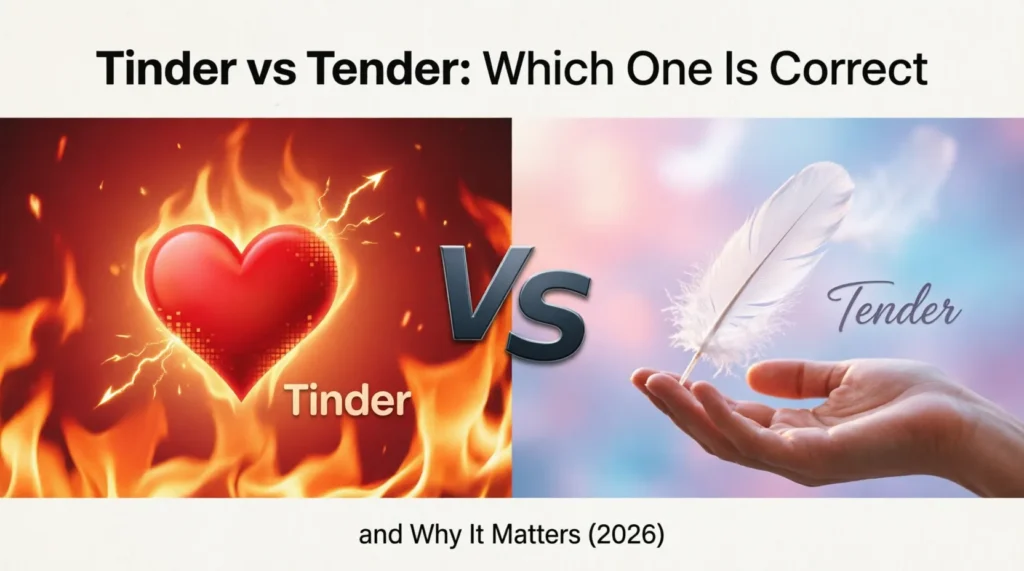
Tinder vs Tender: Which One Is Correct — and Why It Matters (2026)

In short, “tinder” and “tender” are both correct words, but they have completely different meanings and uses, and confusing them can change your entire message. Tinder refers to dry material used for starting a fire or a dating app, while tender usually means gentle, soft, or an official offer in business. Understanding tinder vs tender

Tinder vs Tender: Which One Is Correct — and Why It Matters (2026) Read More »

Spelling Corrections

hierarchical vs hierarchal

Hierarchical vs Hierarchal: Which One Is Correct — and Why It Matters (2026)

In short, “hierarchical” is the standard and widely accepted form, while “hierarchal” is a much rarer variant that most style guides and writers avoid. In everyday writing, you will almost always want to use “hierarchical” in your work, emails, and academic tasks. Understanding the difference in hierarchical vs hierarchal will help you write with more

Hierarchical vs Hierarchal: Which One Is Correct — and Why It Matters (2026) Read More »

Spelling Corrections
stary or starry

Stary Or Starry: Which One Is Correct — and Why It Matters (2026)

In short, starry is the correct English word when describing something full of stars, like a starry sky or starry night. Stary is generally considered a spelling mistake in English, though it may appear in names or other languages. Understanding the difference between stary or starry helps you write more confidently and avoid one of

Stary Or Starry: Which One Is Correct — and Why It Matters (2026) Read More »

Spelling Corrections
scrapped vs scraped

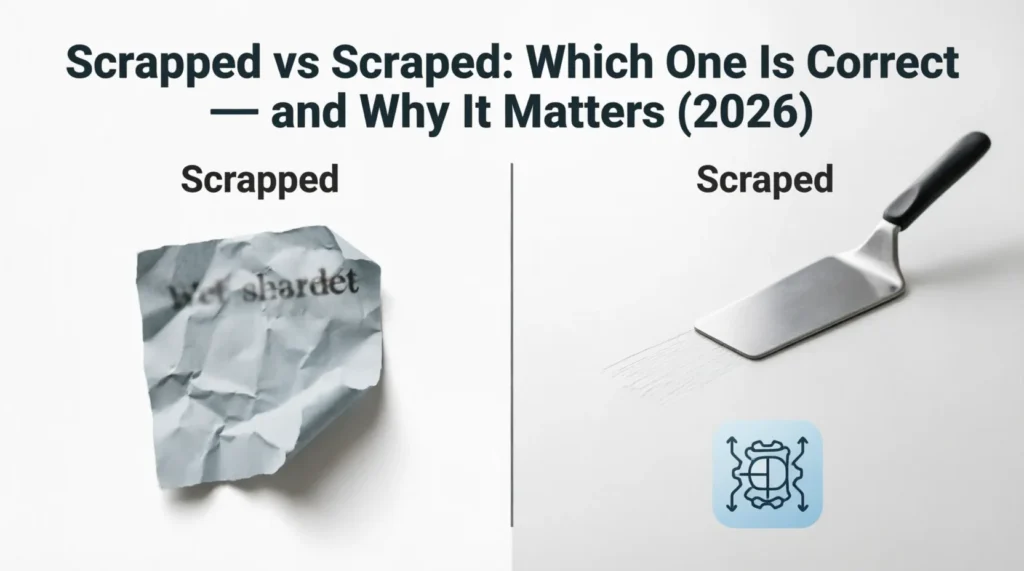
Scrapped vs Scraped: Which One Is Correct — and Why It Matters (2026)

In short, “scrapped” and “scraped” are both correct words, but they mean completely different things. “Scrapped” usually refers to canceling or discarding something, while “scraped” refers to rubbing, collecting, or lightly scratching a surface. Understanding scrapped vs scraped helps you avoid embarrassing writing mistakes and communicate your ideas clearly in both casual and professional contexts.

Scrapped vs Scraped: Which One Is Correct — and Why It Matters (2026) Read More »

Spelling Corrections

therefore vs thereby

Therefore vs Thereby: Which One Is Correct — and Why It Matters (2026)

In short, both therefore and thereby are correct English words, but they are not interchangeable. Therefore shows a result or conclusion, while thereby shows the method or means by which something happens. Understanding the difference between therefore vs thereby will instantly make your writing clearer and more precise, and you’ll see how easily this confusion

Therefore vs Thereby: Which One Is Correct — and Why It Matters (2026) Read More »

Spelling Corrections
broke vs broken

Broke vs Broken: Which One Is Correct — and Why It Matters (2026)

In short, “broke” and “broken” are both correct, but they are used in different grammatical situations. “Broke” is the past tense of “break” and often describes financial state informally, while “broken” is the past participle used for completed actions or conditions. Understanding broke vs broken helps you write more confidently and naturally in everyday English.

Broke vs Broken: Which One Is Correct — and Why It Matters (2026) Read More »

Spelling Corrections
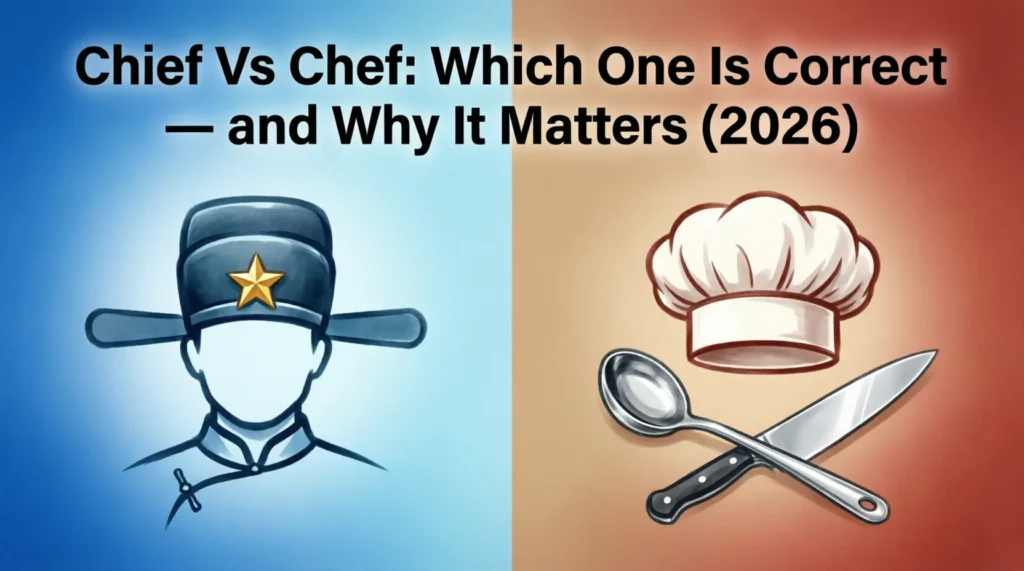
chief vs chef

Chief Vs Chef: Which One Is Correct — and Why It Matters (2026)

In short, chef and chief are both correct English words, but they are completely different in meaning and usage. “Chef” refers to a professional cook, while “chief” refers to a leader or person in charge. The confusion in chief vs chef comes from how similar they sound, but they are not interchangeable. Let’s break it

Chief Vs Chef: Which One Is Correct — and Why It Matters (2026) Read More »

Spelling Corrections
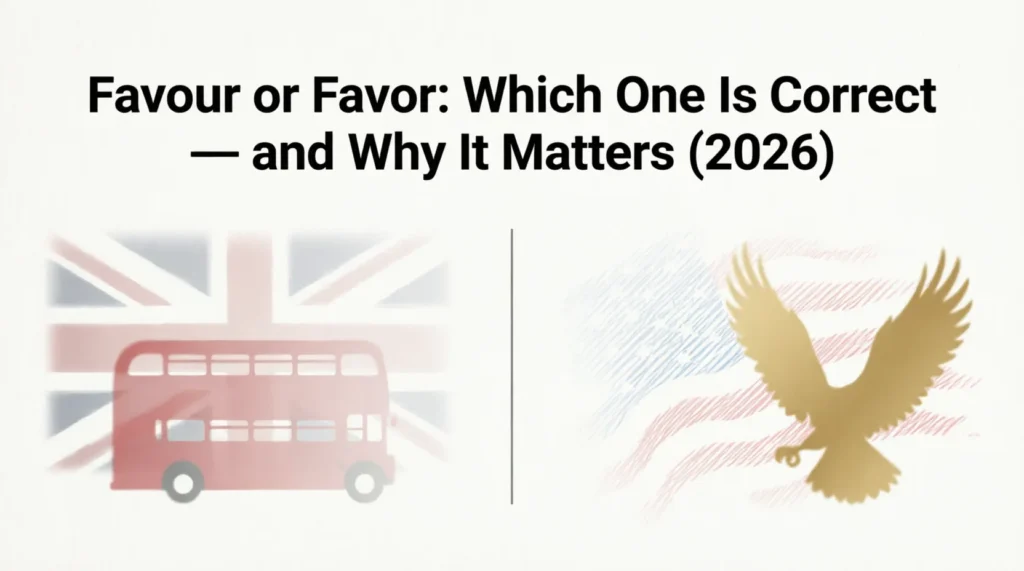
favour or favor

Favour or Favor: Which One Is Correct — and Why It Matters (2026)

In short, both “favour” and “favor” are correct, but they are used in different varieties of English. “Favour” is standard in British English, while “favor” is the American English spelling. The meaning stays the same in both cases, and the choice depends on your audience and writing style, so understanding this helps you write with

Favour or Favor: Which One Is Correct — and Why It Matters (2026) Read More »

Spelling Corrections
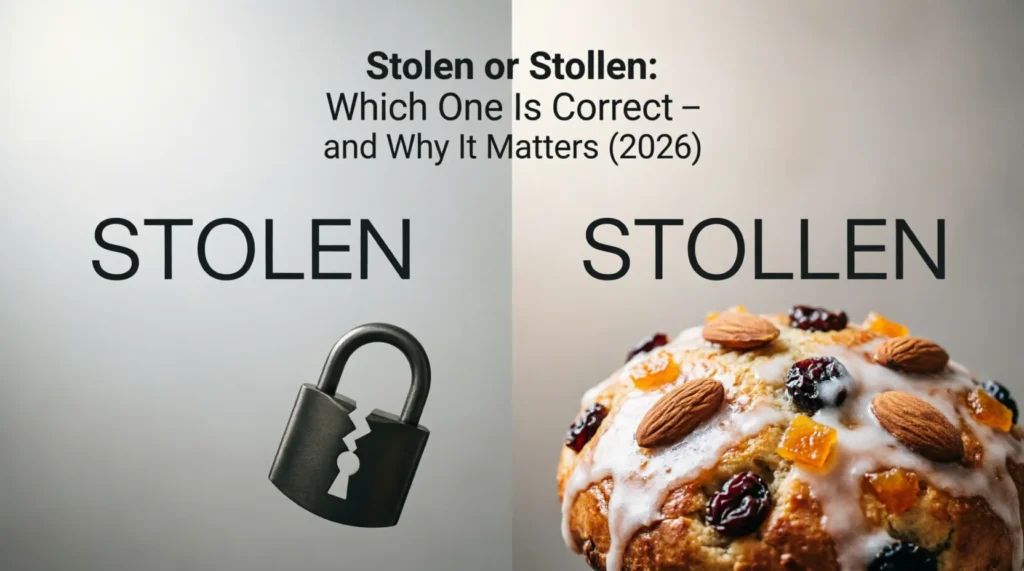
stolen or stollen

Stolen or Stollen: Which One Is Correct — and Why It Matters (2026)

In short, “stolen” is the correct English word for something taken illegally, while “stollen” is not an English word in that context and is actually the name of a German Christmas bread. Understanding this difference helps you avoid a very common spelling mix-up that can completely change your meaning in writing. If you’ve ever paused

Stolen or Stollen: Which One Is Correct — and Why It Matters (2026) Read More »

Spelling Corrections
Scroll to Top