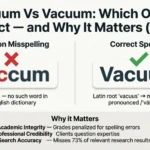
In short, studying is the correct spelling, while studing is a misspelling in standard English. The confusion usually happens because English spelling rules can be tricky when adding endings to words. Understanding the reason behind this spelling change will help you write with confidence every time.
The Confusion Around Studying vs Studing
Imagine you’re finishing an essay late at night and typing quickly. You write, “I am studing for my final exam,” and suddenly the word looks a little strange. You pause and wonder whether it should be studying or studing.
This happens more often than you might think. Students, professionals, bloggers, and even experienced writers occasionally hesitate when faced with studying vs studing.
The reason is simple: English spelling does not always follow the most obvious pattern. A word like “study” seems straightforward, yet adding “-ing” creates uncertainty for many people.
What Each Word Actually Means
Let’s start with the correct form.
Studying is the present participle and gerund form of the verb “study.” It describes the action of learning, reviewing information, researching a topic, or focusing on educational work.
Example:
“I am studying for my chemistry exam this weekend.”
In this sentence, studying describes an ongoing action.
Now let’s look at “studing.”
Studing is not considered a correct spelling in standard English. It is simply a spelling mistake that appears when someone removes the “y” from “study” before adding “-ing.”
Example of incorrect usage:
“I am studing for my chemistry exam this weekend.”
The corrected sentence is:
“I am studying for my chemistry exam this weekend.”
So when comparing studying vs studing, only studying is accepted in formal writing, academic work, professional communication, and everyday English.
Why People Mix Up Studying vs Studing
The confusion comes from a spelling pattern that many English learners encounter with words ending in “y.”
Language researchers have observed that people often try to apply spelling rules from other words to similar-looking words. Since some words change when endings are added, writers may assume “study” should lose its “y” before taking “-ing.”
However, English treats “-ing” differently from some other endings.
Consider these examples:
Study → studying
Play → playing
Carry → carrying
Enjoy → enjoying
In each case, the original “y” remains.
Linguists explain that when adding “-ing” to most verbs ending in “y,” the “y” stays in place. Because many writers are more familiar with forms like “studied” or “studies,” where spelling changes occur, they may accidentally create the incorrect form “studing.”
The Simple Rule to Remember Which Is Which
Here’s the easiest rule:
When adding “-ing” to a verb ending in “y,” keep the “y.”
That’s it.
If the base word is “study,” simply add “-ing” and you get “studying.”
Think of it this way:
“Y stays when -ing comes to play.”
Examples:
I am studying for tomorrow’s history test.
She spends her evenings studying at the library.
They are studying customer feedback before launching the product.
If you remember that the “y” stays, you’ll never have to wonder about studying vs studing again.
Common Mistakes People Make With Studying vs Studing
Writing “I am studing for my exam.” The mistake is dropping the “y.” Correct version: “I am studying for my exam.”
Assuming “study” follows the same pattern as “studied.” The spelling rule changes with different endings. Correct version: “She is studying biology.”
Typing too quickly and missing the “y.” This is a common keyboard error. Correct version: “We are studying the report carefully.”
Trusting autocorrect to catch every mistake. Some tools may overlook errors in certain contexts. Correct version: “The students are studying in the classroom.”
Real-World Examples: Studying vs Studing Used Correctly
Casual conversation: “I’m studying for my driving test tonight.”
This shows an ongoing learning activity in everyday speech.
Professional writing: “Our team is studying market trends before making a decision.”
Here, studying refers to careful analysis and research.
Academic writing: “Researchers are studying the long-term effects of climate change.”
The word correctly describes a continuing investigation.
Creative writing: “She sat by the window, studying the stars as darkness filled the sky.”
In this context, studying means observing something closely and thoughtfully.
These examples demonstrate that studying works naturally in many different situations, while studing does not belong in standard English.
British English vs. American English — Does It Affect Studying vs Studing?
No. This is not a British-versus-American spelling difference.
In both British English and American English, the correct spelling is studying. Major dictionaries, style guides, and educational institutions in both regions use the same form.
People around the world encounter the studying vs studing confusion for the same reason: English spelling patterns can sometimes seem inconsistent. Regardless of where you live, studying is the accepted spelling.
What Grammar Checkers and Style Guides Say About Studying vs Studing
Grammar experts and style guides consistently recognize studying as the correct form. Because studing is a straightforward spelling error, professional editing standards reject it in formal writing.
Most grammar-checking tools will flag “studing” and suggest “studying.” However, spellcheck should not be your only line of defense. Automated tools are helpful, but understanding the rule yourself makes you a stronger writer.
The practical takeaway is simple: if you’re talking about the action of study in progress, write studying.
Studying vs Studing in Professional and Academic Writing
In professional settings, small spelling mistakes can influence how readers perceive your work. An email, report, proposal, or application that contains “studing” may appear less polished than one that uses the correct spelling.
Academic writing places even greater emphasis on accuracy. Teachers, professors, and reviewers expect standard spelling conventions. Using studying correctly helps your writing look more credible and carefully prepared.
The good news is that this is an easy mistake to fix. Once you understand that the “y” stays when adding “-ing,” you’ll be able to write the word confidently in any context.
Precision in language matters across educational, professional, and scholarly traditions, including translated academic and religious texts where accurate spelling supports clear communication.
Quick Recap: Studying vs Studing at a Glance
Studying is the correct spelling in standard English.
Studing is a misspelling and should be avoided.
When adding “-ing” to “study,” keep the letter “y.”
British and American English both use studying.
Remember: “Y stays when -ing comes to play.”
Frequently Asked Questions About Studying vs Studing
Is studying the correct spelling?
Yes. Studying is the correct spelling and is accepted in all forms of standard English. It is the present participle and gerund form of the verb “study.”
Why is it studying and not studing?
The word study keeps its “y” when “-ing” is added. English spelling rules generally preserve the “y” in verbs like study, carry, and enjoy when forming the “-ing” version.
Is studing ever a real word?
No. Studing is not recognized as a standard English word. It is considered a spelling mistake rather than an alternative spelling.
How do you spell studying for an exam?
The correct spelling is “studying.” For example: “I am studying for my math exam tomorrow.”
Why does study become studied but not studing?
When adding endings such as “-ed” or “-es,” words ending in a consonant plus “y” often change the “y” to “i.” That’s why we write “studied” and “studies.” However, when adding “-ing,” the “y” stays, giving us “studying.”
Final Thoughts on Studying vs Studing
The answer to studying vs studing is clear: studying is correct, while studing is a misspelling. The key rule is that the “y” remains when you add “-ing” to the verb “study.”
If you’ve ever hesitated over this spelling, you’re in good company. Many writers make the same mistake because English contains several similar-looking spelling patterns.
Now that you understand the rule, you can use studying confidently in essays, emails, reports, applications, and everyday writing. That’s one less spelling question to second-guess and one more step toward becoming a more confident writer.
Emily Thornton holds a Master’s degree in Linguistics from the University of Chicago and has been passionate about language education for over 15 years. Her interest in language developed at a young age, fueled by a curiosity for how intricacies in language shape communication. Emily has authored several guides on grammar usage and works extensively with ESL learners to improve their fluency and confidence in English. Dedicated to clarity, she writes content that demystifies complex spelling and grammar issues, making her contributions invaluable for professionals looking for authoritative and swift language solutions. Emily continues to explore innovative ways to bridge communication gaps through accurate and effective language use. Her blend of academic rigor and practical insight ensures learners across all levels find her advice beneficial.