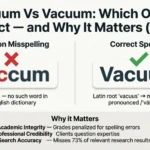
In short, “cited” is used when referring to sources, references, or quotations, while “sited” refers to a physical location or where something is placed or built. Both words are correct in English, but they are not interchangeable, which is where most confusion comes from. Once you understand the difference in sited vs cited, your writing instantly becomes clearer and more confident.
The Confusion Around sited vs cited
You’re writing an essay, and everything is going smoothly—until you reach a sentence where you need to mention a source or a location. You pause. Should it be sited vs cited? It looks simple, but suddenly both options feel right and wrong at the same time.
This is exactly where most writers get stuck. Whether you’re a student finishing an assignment, a professional drafting a report, or a blogger polishing an article, this tiny spelling choice can feel surprisingly stressful.
The confusion around sited vs cited is common because both words are real English words, both are short, and both sound identical when spoken aloud. That makes it very easy to mix them up in writing without even realizing it.
What Each Word Actually Means
To understand sited vs cited, you need to look at each word separately, because they belong to completely different ideas in English.
Cited is a verb (past tense of “cite”). It means to mention, quote, or refer to a source of information. You use it in academic writing, research papers, news articles, and formal essays. Example: You cited three studies in your research paper to support your argument.
In simple terms, “cited” is about sources and references. When you use someone’s ideas, words, or research, you cite them.
Sited, on the other hand, is also a verb (past tense of “site,” though it is less commonly used this way). It means to place, locate, or position something in a specific physical location. Example: The new school was sited near the river for easy access.
Here, “sited” is about location and placement, not information or sources. So when you are talking about where something exists in the real world, you use sited, not cited.
SECTION 1: sited vs cited: Side-by-Side Comparison
Here is a quick breakdown to make Sited vs Cited easier to compare at a glance.
Feature
sited
cited
Meaning
placed or located somewhere
quoted or referenced source
Part of Speech
verb (past of site)
verb (past of cite)
Formality
neutral
formal or neutral
Common Context
buildings, locations, planning
research, writing, law
Example Sentence
The house was sited on hill
The study cited many sources
Can They Be Swapped?
No, location meaning
No, source meaning
Why People Mix Up sited vs cited
Language researchers often point out that confusion like sited vs cited happens because English has many homophones—words that sound the same but have different meanings and spellings.
When you hear both words aloud, there is no difference in pronunciation. That means your brain has no sound-based clue to guide you. You have to rely entirely on context and spelling, which is where mistakes happen.
Another reason is that “cite” is much more common in academic and digital writing than “site” as a verb. People see “cite sources” often, so they assume “sited” might be related—but it actually belongs to a completely different word family.
Add fast typing, autocorrect assumptions, and casual writing habits, and you get a perfect recipe for confusion.
The Simple Rule to Remember Which Is Which
Here’s an easy way to remember sited vs cited:
If you are talking about sources, studies, or references → use “cited”
If you are talking about physical location or placement → use “sited”
Think of it like this: “Cited = Cite = Cite your source.” “Sited = Site = Location or place.”
Now try it in real sentences:
You cited five articles in your essay to support your argument.
The hospital was sited in a quiet part of the city.
Your professor expects every claim to be properly cited.
Once you apply this rule, sited vs cited becomes much easier to separate in your mind.
Common Mistakes People Make With sited vs cited
Using “sited” instead of “cited” in essays Wrong: You sited several research papers in your introduction. Correct: You cited several research papers in your introduction.
Confusing “cited” with physical placement Wrong: The building was cited near the highway. Correct: The building was sited near the highway.
Assuming both words mean “mentioned” Wrong: The author sited historical sources in the article. Correct: The author cited historical sources in the article.
Relying only on spellcheck Wrong: The report was sited correctly in APA format. Correct: The report was cited correctly in APA format.
Each mistake comes from mixing meaning instead of spelling alone, which is why understanding context matters more than memorizing letters.
SECTION 1: sited vs cited: Side-by-Side Comparison
Here is a quick breakdown to make Sited vs Cited easier to compare at a glance.
Feature
sited
cited
Meaning
placed or located somewhere
quoted or referenced source
Part of Speech
verb (past of site)
verb (past of cite)
Formality
neutral
formal or neutral
Common Context
buildings, locations, planning
research, writing, law
Example Sentence
The house was sited on hill
The study cited many sources
Can They Be Swapped?
No, location meaning
No, source meaning
Real-World Examples: sited vs cited Used Correctly
Academic writing: “The researcher cited multiple peer-reviewed journals to support her findings.” This shows proper use of “cited” in formal academic work.
Workplace report: “The report cited recent market data to justify the new strategy.” Here, “cited” strengthens credibility in professional writing.
Urban planning context: “The new factory was sited away from residential areas to reduce noise impact.” This shows “sited” used for physical location planning.
Casual explanation: “You should always cite your sources when writing online content.” This reflects everyday advice about responsible writing.
Each example highlights how sited vs cited depends entirely on meaning, not appearance.
British English vs. American English — Does It Affect sited vs cited?
When it comes to sited vs cited, there is no major difference between British and American English usage. Both regions use “cited” for references and “sited” for physical placement in the same way.
Unlike spelling differences such as “colour” vs “color,” this pair is not region-dependent. The confusion exists globally because the issue is based on meaning, not geography.
So whether you are writing in London, New York, or anywhere else, the rule stays exactly the same.
What Grammar Checkers and Style Guides Say About sited vs cited
Most grammar tools and style guides treat this distinction very strictly. “Cited” is consistently flagged as correct in reference contexts, while “sited” is only accepted when referring to location or placement.
Style guides emphasize that context determines correctness, not spelling similarity. If you misuse sited vs cited, even advanced grammar checkers will usually detect it only when the sentence meaning clearly breaks.
That’s why relying only on tools is not enough—you still need to understand the rule yourself to avoid subtle errors.
sited vs cited in Professional and Academic Writing
In professional and academic environments, using sited vs cited correctly is more important than it might seem. These are settings where clarity and credibility matter.
If you misuse “cited,” it can make your work look careless, especially in research, essays, or formal reports. On the other hand, using “sited” correctly shows precision in describing locations, planning, or design contexts.
The good news is that once you master this distinction, you almost never have to second-guess yourself again. It becomes automatic, and your writing immediately feels more polished and reliable.
Quick Recap: sited vs cited at a Glance
“Cited” = used for sources, references, and quotations
“Sited” = used for physical location or placement
They sound identical but have completely different meanings
“Cited” is far more common in academic and formal writing
Context is the only way to choose correctly
Frequently Asked Questions About sited vs cited
Is it “cited” or “sited” in academic writing?
In academic writing, you almost always use “cited” when referring to sources. It means you are referencing books, studies, or research papers. “Sited” is not used for sources at all, which is a common mistake students make.
Can “sited” ever mean referenced?
No, “sited” does not mean referenced. It is only used for physical placement or location. If you are talking about information sources, you should always use “cited” instead.
Why do sited vs cited sound the same?
They are homophones, meaning they are pronounced the same but spelled differently. This is why many writers confuse them when typing quickly or relying on memory instead of meaning.
Is “sited” a real word in English?
Yes, “sited” is a real word, but it is much less common. It is used when describing where something is placed, built, or located in a physical sense.
How can I stop mixing up sited vs cited?
The easiest way is to link “cite” with “source” in your mind. If you are dealing with information or references, use “cited.” If you are dealing with physical location, use “sited.”
Final Thoughts on sited vs cited
The difference between sited vs cited comes down to one simple idea: sources versus locations. Once you clearly separate those meanings, the confusion disappears almost instantly.
This is one of those small grammar points that feels tricky at first but becomes second nature with a bit of awareness. Many writers struggle with it, so if you’ve ever paused mid-sentence wondering which one is right, you’re in very good company.
Now that you understand the rule, you can write with more clarity and confidence—and you’ll never have to hesitate over sited vs cited again.
Frequently Asked Questions
What is the main difference between 'sited' and 'cited'?▼
The main difference is that ‘cited’ refers to mentioning or quoting a source of information, while ‘sited’ pertains to the physical location or placement of something. Understanding this distinction can help clarify your writing.
In what contexts should I use 'cited'?▼
You should use ‘cited’ in academic writing, research papers, and any formal essays when referring to sources or references. For example, you might say, ‘The study cited numerous sources to support its conclusions.’
When is it appropriate to use 'sited'?▼
Use ‘sited’ when discussing the physical placement or location of an object or building. An example would be, ‘The new library was sited in the center of town for accessibility.’
Why do people confuse 'sited' and 'cited'?▼
People often confuse ‘sited’ and ‘cited’ because they are homophones, meaning they sound the same but have different meanings and spellings. Additionally, the more frequent use of ‘cite’ in academic contexts can lead to assumptions about ‘sited.’
Can I use 'sited' and 'cited' interchangeably?▼
No, ‘sited’ and ‘cited’ cannot be swapped as they refer to different concepts. ‘Cited’ is about sources and references, whereas ‘sited’ relates to physical locations.
What is a simple way to remember the difference between 'sited' and 'cited'?▼
A simple way to remember is: if you’re discussing sources, studies, or references, use ‘cited.’ If you’re talking about a physical location, use ‘sited.’ This can help avoid confusion.
Are both 'sited' and 'cited' correct in English?▼
Yes, both ‘sited’ and ‘cited’ are correct but serve different purposes in writing. It’s important to use them in the right context to convey your meaning clearly.
Emily Thornton holds a Master’s degree in Linguistics from the University of Chicago and has been passionate about language education for over 15 years. Her interest in language developed at a young age, fueled by a curiosity for how intricacies in language shape communication. Emily has authored several guides on grammar usage and works extensively with ESL learners to improve their fluency and confidence in English. Dedicated to clarity, she writes content that demystifies complex spelling and grammar issues, making her contributions invaluable for professionals looking for authoritative and swift language solutions. Emily continues to explore innovative ways to bridge communication gaps through accurate and effective language use. Her blend of academic rigor and practical insight ensures learners across all levels find her advice beneficial.