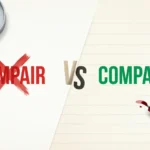
In short, the correct spelling is always “compare” — “compair” is a common misspelling with no standing in standard English, likely caused by confusion with words like “repair” that legitimately end in “-air.”
Why This Mistake Happens
“Compare” is often misspelled as “compair” because English has several common words ending in “-air” (repair, affair, chair), and the ear doesn’t distinguish the unstressed final syllable clearly enough to signal which spelling applies.
The Correct Usage
“Compare” comes from the Latin comparare, meaning to pair equally, and it’s always spelled with an “-are” ending, whether used as a verb (“compare the two options”) or in derived forms like “comparison” and “comparable.”
A Simple Way to Remember It
Since “compare” is about finding what’s similar, remembering that it shares its “-are” ending with “similar-sounding” words like “declare” and “prepare” (not “repair”) can help lock in the correct spelling.
Related Words That Follow the Same Pattern
Comparison, comparable, comparative, and comparatively all keep the “compar-” root intact — none of them ever take the “-air” spelling.
Frequently Asked Questions
Is “compair” ever correct in any dialect? No — it’s considered a misspelling in every standard variety of English.
What’s the easiest way to remember the correct spelling? Think of the root word “pair” as in “comparing a pair of things,” then add “com-” — com + pare, not com + pair.